Allergy To Cancer, The Hidden Health Costs Of Chasing The Perfect Hair Colour
Total Views |


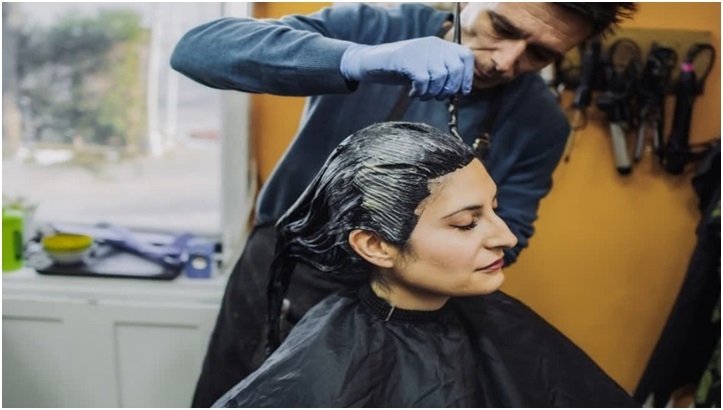
The Central Drugs Standard Control Organisation (CDSCO) has issued a fresh compliance advisory for manufacturers and importers of hair colour cosmetics. The advisory reminds companies that hair colour products must comply with Bureau of Indian Standards (BIS) specifications, the Cosmetics Rules, 2020, and strict labelling requirements. Any changes to product composition, quality specifications or labels must be reported to regulators.
Every time you colour your hair, a miniature chemistry experiment takes place. Hair dye works by opening the hair cuticle and altering the natural pigment inside the hair shaft. To do this, manufacturers use a combination of ingredients.
Dye precursors are colourless molecules that react with hydrogen peroxide to create chromophores (the compounds that produce colour).
Alkaline agents such as ammonia raise the pH of the hair, allowing those colour molecules to penetrate deeply.
Conditioning agents attempt to repair some of the damage caused during the process.
Many conventional hair dyes contain ammonia, which helps open the hair cuticle but can also irritate the scalp, eyes and respiratory tract. Anyone who has sat through a hair-colouring session and wondered why the room suddenly smells like a chemistry lab already knows this.
Then there's hydrogen peroxide. It is essential for activating colour and lightening hair, but it also causes oxidative stress to hair fibres. This is one reason coloured hair often becomes dry, brittle and prone to breakage.
Resorcinol, another common ingredient, has drawn attention because studies suggest it may interfere with thyroid and reproductive hormones.
Toluene-2,5-diamine, frequently used in dark shades, is considered a potent allergen and remains under scientific scrutiny because of concerns about possible carcinogenic effects.
Lead acetate, though banned in cosmetics by the US FDA, can still occasionally appear in imported products marketed for gradual hair darkening.
Coal tar derivatives, meanwhile, continue to be used in some formulations because they provide intense, durable colour despite longstanding concerns regarding certain compounds within this category.
Among all the ingredients found in hair dyes, one name appears repeatedly in dermatology clinics. Para-phenylenediamine, better known as PPD. PPD is widely used in darker permanent hair colours because it creates rich, long-lasting shades. Unfortunately, it is also one of the most common causes of hair dye allergies.
PPD is widely used in darker permanent hair colours but is also the most common cause of hair dye allergy (Getty Images)
Says Dr Katheeja Nasika, Consultant, Department of Dermatology at Rela Hospital in Chennai, “Paraphenylenediamine is one agent that causes reactions ranging from simple itch to severe reactions such as swelling of the face, redness around the eyes, burning sensations, severe dermatitis, and pigmentation. Long term use of certain nitrosamines (also known as aromatic amines) and formaldehyde-like ingredients has been associated with cancer. Though post 1980, the formulations are comparatively safer, the risk is not nil.”
The problem is that many users discover they are allergic only after they apply the dye. That's why dermatologists strongly recommend a patch test 48 to 72 hours before colouring hair.
Says Dr. Monika Jani, Gynaecologist and Obstetrician at Bhailal Amin General Hospital in Vadodara, “Hair dyes and straighteners often contain endocrine-disrupting chemicals that interfere with hormone function in the body. Ingredients such as aromatic amines, parabens, and phthalates in dyes, along with formaldehyde in straighteners, can damage DNA and potentially lead to cancer.”
In fact, A 2024 study published in the International Journal of Cancer found that women who used chemical hair straighteners every 5-8 weeks were 30% more likely to develop breast cancer. The risks are even higher for those using darker shades of permanent hair dye, as these products tend to contain greater concentrations of harmful chemicals.
However, hair dye formulations today are significantly safer than they were decades ago. Dr. Nasika points out that since the 1980s, many formulations have improved and the risk profile has changed considerably. Yet she adds that the risk is not zero. “Long-term use of certain nitrosamines, aromatic amines and formaldehyde-like ingredients has been associated with carcinogenic potential,” she explains.
The people most vulnerable are often not consumers but professionals. Hairdressers and salon workers may be exposed repeatedly through skin contact and inhalation over many years. For them, cumulative exposure becomes an occupational health issue.